Tuesday, April 25, 2017

Environmental Unit Reflection

In Elizabeth Kolbert's The Sixth Extinction, Kolbert claims that “Though it might be nice to imagine there once was a time when man lived in harmony with nature, it’s not clear that he ever really did". Humans might have been the start of the destruction of this planet, all the advancements humans have made have caused damage on the entire planet. The environment is what surrounds human beings and all other species that live and operate. The environment is extremely important to the organisms that inhabit this planet, therefore it is necessary that it is kept safe.

Image result for ocean acidification
Image From My Teachback
Humans have had a great impact on the planet. A great example of this has been ocean acidification. As the years have gone by, humans have been using more and more carbon dioxide due to transportation, building, consuming electricity and so much more. There has been such an increase in carbon dioxide because the use of machines such as cars has increased as well, before the car was even invented, there was a much lower amount of carbon dioxide in the atmosphere than there is now. Carbon dioxide gets absorbed by the ocean, which turns it into
Concept Map on Coral Bleaching
carbonic acid, which causes a more acidic pH in the ocean. Ocean acidification can lead to limited shell growth in marine life, damage
the reproductive organs in fish and bleach the coral. For the past 300 million years, the ocean's pH level has been 8.2 however, it has now dropped to 8.1. Conserving the ocean and protecting it from acidification is important because marine plants account for approximately 70% of the world's oxygen. Without this great source of oxygen, humans would surely die out


Model for Unit Project
Pollution is yet another danger to the environment currently that humans have contributed to. An example of this is littering, countless pounds of plastic and other trash has been dumped into water sources all over the world which is contributing to pollution in waters. Although there are many different factors that lead to pollution, trash is one of them and by stopping one habit that causes pollution, it could greatly decrease the current amount of pollution the environment is dealing with right now. One example of local pollution is The Russian River. The visitors and locals at The Russian River dispose a lot of trash and waste into the river that is converting this beautiful place into a gross dump. Not only does the trash pollute the river, but it can also travel to the oceans and contribute to the gyres that are collecting in the rivers. The trash is also harming the wildlife that occupy the ecosystem. Fish species such as the coho salmon, chinook salmon and steelhead trout have become threatened or even endangered due to the harmful environment they occupy. Littering is a serious danger to the environment, not just for the rivers, but also for the animals that live there and the oceans that those rivers lead to. Not tossing one piece of plastic into the rivers or oceans can make a big difference.

Concept Map on Carbon Dioxide
Energy was another important topic that the NEW students learned about during this unit. Humans often use fossil fuels as an energy source, however, it takes hundreds of millions of years for them to form. They form with pressure, high heat and time. Fossil fuels are not considered a renewable resource, meaning that they can't be replenished in a human lifetime. The United States alone uses about 11 billion tons of oil in fossil fuels every year. It is expected that there will be no more fossil fuels by the year 2088. To protect the environment and maintain the fossil fuels, there needs to be a more clean and efficient alternative to the energy humans are currently using. Clean energy sources is energy that does not pollute the atmosphere when used. Clean energy sources can come from the sun, wind, water, and steam. Although these options are very healthy for the environment, they are not as efficient. It is important that humans keep the air from being polluted because it contaminates the atmosphere and can even negatively affect the health of someone that has been exposed to the air pollution for a long period of time.

In conclusion, this unit has taught me a great deal of information about how important the environment is to the humans an animals that occupy this planet. The environment is in danger, humans have many bad habits that are harming it and will cause it to slowly die away unless something is done about it soon. Humans have greatly affected the planet in both positive and negative ways, but the negative impacts can be deadly. Water and air pollution along with ocean acidification are serious issues that the environment is struggling with for a while now, if the people on this planet all helped a little, there would be a drastic change and it could help lead to a healthier environment.  

Monday, April 10, 2017

Deeper Learning Dive


To learn more about a topic that we are unclear about, NEW students began a deeper learning dive where we find a video and try to understand said topic. The video inserted above is from a channel called Teacher's Pet, a channel with a little over 20 thousand subscribers that posts quick science videos for students. The channel is run by a science teacher in California and has been around for about a year and a half on YouTube. The quality of these videos is great and the information is accurate and helpful.

From this video I learned that the study of ecology is basically the study of how organisms relate to one another and to the environment around them. Interdependence is when the survival of a species is dependent on another living organism or nonliving component. An ecosystem is where like a community where organisms react with their environment. A biotic factor is the living part of a habitat while an abiotic factor is the nonliving part of a habitat.


This video helped me as a learned mostly because of the visuals, being able to see pictures and examples while it was being taught to me really helped me to understand the information. The teacher that speaks in the video uses a very clear tone that's at a perfect pace so that I could understand what she was saying, she was not speaking too fast or too slow. Finally, the video was the perfect length and gave just the right amount of information. The video was almost 5 minutes long which is perfect because the video wasn't feeding me so much information to the point where I was overwhelmed, but it also did not leave anything out.

Monday, March 6, 2017

Food Web Task

This morning, NEW students started the day with an introduction to Ecology with a demo. The demo started with breaking up into groups of 11-12 and choosing one group member to be the director. We opened an envelope that contained small pieces of paper, each with a different animal on it. Each student (except the director) selected an animal. The director would help connect the animals with yarn. The purpose of this demo was to help us become more familiar with how different animals in biomes are connected and who are the consumers. 

Photo

A biome is an animal or plant community and each group got a different type of biome, ours was rain forest. 

Tuesday, February 28, 2017

Row-Bot Ted Talk


Row-Bots Ted Talk

The welcome task this morning in NEW was a Ted Talk by Jonathan Rossiter and his solution to a huge environmental problem. He invented a robot that eats pollution, he calls it a Row-Bot because it was inspired by the water boatman which is an insect that lives in the water that feeds on algae. This robot is a perfect example of what NEW students should be designing for their environmental unit project that is coming up.
The main issue that this Row-Bot is targeting is pollution, he mentioned the Algal Bloom off Cornwall in the UK and the Deep water oil spill in the Gulf of Mexico. Rossiter mentioned that every robot has at least these three components, a body, a stomach and a brain.

Tuesday, February 21, 2017

Environmental Exploration

We are starting our environmental unit in NEW school, and to start off the day we did an environmental exploration assignment where we watched three videos on an environmental problem that is occurring in the world right now and we had to then annotate an article for each of those videos and then create a concept map.

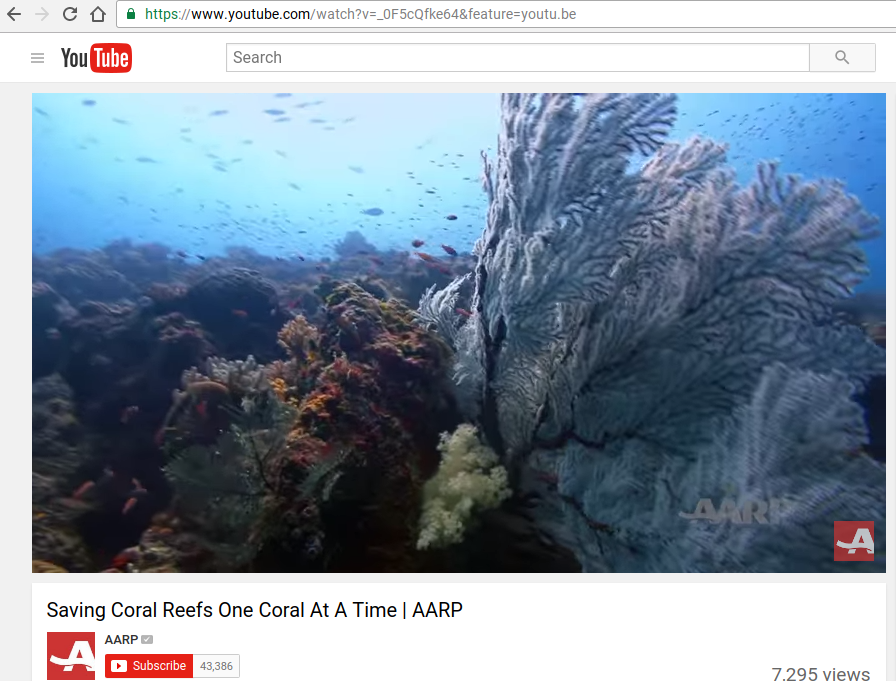
One of my favorite videos to watch was the one on saving the coral reefs,


This video told the story of a man who is growing his own coral and taking it back to the ocean so that the coral reefs can flourish as they once used to, it's is extremely important that the coral reefs do not die out because they are accountable for a lot of the oxygen that we breathe.

Concept maps was a new thing for many people in NEW school today and many found it to be a great way of organizing their thoughts.

Displaying IMG_2191.JPG

Overall, it was a very interesting and educational morning in the sense that we got to see how other people are solving serious environmental issues and we also got to practice our annotations skills along with learning how to create concept maps.

Wednesday, February 15, 2017

Self-Reporting Grades

This morning in class, we read about how beneficial self reflecting can be for a student based on the investigations of John Hattie, a professor of education at Auckland University. There are a series of questions that a student should ask themselves when they self reflect,

Related image
  • Are you satisfied with your learning? 
  • Are you satisfied that you demonstrated your knowledge and skill? 
  • How does your work compare to the expectations on the rubric? 
  • With which parts of the assignment (project, performance, etc.) were you most satisfied? 
  • How closely does your work on this assignment (project, performance, etc.) reflect your learning? 
  • Why do you think this assignment worked for you? 
  • Were there any parts that didn’t work? 
  • How did you do the assignment/project? Be specific. 
  • Were the strategies that you used effective in helping you reach your goals? 
    • What learning strategies were helpful? Explain.
    •  What would you have to add to learn more, do better, etc.? 
  • On a scale of 1 to 10, how would you rate your effort? 
  • Did the amount of time, effort and strategies used help you reach your goal?
  •  If you were to do this over, how could it be improved? 
  • As a teacher, what can I do to help you? 
  • What can I do to increase the value of this assignment/project, etc.?

Wednesday, February 1, 2017

STEM Challenge

On fun Friday, Neto gave us a STEM project to give us some hands on experience, this STEM challenge was to create a water slide for a little toy person to slide down. The slide had to be waterproof and not kill the toy if it were a real person. The longest and tallest water slide that was the safest would win the STEM challenge and that group would win the most points. The design that our team came up with involved using cups as a tunnel for the toy to go through and then at the end there was a plank of wood for the toy to safely fall slide down at the end. When Neto started pouring the water into our slide and the toy was put in, it got a little stuck in the plastic cups but with a little nudge it finally fell through and safely fell to the bottom. 

My team didn't win first place because there were other teams that did a better job at getting the toy through their slide safely that were longer and taller than ours. If we were to do this again, I would have our group widen the holes in the plastic cups so that the toy could fall through more easily and not get stuck, I would also like to try getting a lot more plastic cups and make our slide longer and taller so that we could have a better chance of winning the challenge. 

At the end of the day, everyone's competitive spirit helped create these amazing slides that were very entertaining to watch a toy go down, especially when it didn't work out very well. Nobody's slide was perfect but everyone tried their best and put in a lot of effort.