The first thing we did in class today was watch a Ted Talk about PTSD from Sebastian Junger. Junger himself served a little in the military before 9/11 and experienced some PTSD himself. PTSD stands for post traumatic stress disorder and it is very common in veterans. Junger pointed out that a lot of the people that live in modern society today are more predisposed to be depressed and have a higher rate of killing themselves than someone who lives in a poor society. He also explained that after 9/11 occurred, crime rates lowered in New York, there was less violence, lower rates of suicide and veterans claimed that their PTSD symptoms lowered. Junger explained that the reason for this is that when something traumatizes a whole nation, they can heal together as a group of people that experienced the same kind of trauma. Junger concluded the Ted Talk with explaining that the reason that most veterans come home from war with PTSD is because it is easier to cope in groups and since America is such a broken society, veterans come home from the war to find that the country that the have been protecting and fighting for, isn't united. 10% of the military experience violent experiences in shooting, watching their friends get shot or getting seriously injured, but 50% of the military people experience PTSD. It is hard for vets to come home and have to see what is happening in America, Junger believes this to be one of the main reasons for PTSD rates to be so high.
Monday, January 23, 2017
Sebastian Junger's Ted Talk
The first thing we did in class today was watch a Ted Talk about PTSD from Sebastian Junger. Junger himself served a little in the military before 9/11 and experienced some PTSD himself. PTSD stands for post traumatic stress disorder and it is very common in veterans. Junger pointed out that a lot of the people that live in modern society today are more predisposed to be depressed and have a higher rate of killing themselves than someone who lives in a poor society. He also explained that after 9/11 occurred, crime rates lowered in New York, there was less violence, lower rates of suicide and veterans claimed that their PTSD symptoms lowered. Junger explained that the reason for this is that when something traumatizes a whole nation, they can heal together as a group of people that experienced the same kind of trauma. Junger concluded the Ted Talk with explaining that the reason that most veterans come home from war with PTSD is because it is easier to cope in groups and since America is such a broken society, veterans come home from the war to find that the country that the have been protecting and fighting for, isn't united. 10% of the military experience violent experiences in shooting, watching their friends get shot or getting seriously injured, but 50% of the military people experience PTSD. It is hard for vets to come home and have to see what is happening in America, Junger believes this to be one of the main reasons for PTSD rates to be so high.

Thursday, January 19, 2017
Eating Disorders
Anorexia Nervosa:
Anorexia Nervosa, or Anorexia, is an eating disorder where someone who is already thin or at a normal body weight, restricts themselves of food and has an obsessive fear of gaining weight. 1 in every 200 Americans suffer from this eating disorder. Anorexia is a very dangerous eating disorder that can result in many serious medical conditions such as slow heart rate, low blood pressure, muscle loss or weakness, reduction of bone density, dehydration, fatigue, dry hair or dry skin.
Warning Signs:
Some of the warning signs of anorexia nervosa are,
- Dramatic weight loss.
- Preoccupation with weight, food, calories, fat grams, and dieting.
- Refusal to eat certain foods, progressing to restrictions against whole categories of food (e.g. no carbohydrates, etc.).
- Frequent comments about feeling “fat” or overweight despite weight loss.
- Anxiety about gaining weight or being “fat.”
- Denial of hunger.
- Development of food rituals (e.g. eating foods in certain orders, excessive chewing, rearranging food on a plate).
- Consistent excuses to avoid mealtimes or situations involving food.
- Excessive, rigid exercise regimen--despite weather, fatigue, illness, or injury, the need to “burn off” calories taken in.
- Withdrawal from usual friends and activities.
- In general, behaviors and attitudes indicating that weight loss, dieting, and control of food are becoming primary concerns.
Treatment Options:
- If the patient's life is in immediate danger than hospitalization might be the best option. Hospitalization can be in a medical or psychiatric ward.
- Because of all the complications that come with anorexia, the patient may need frequent monitoring of vital signs to make sure that they are healing.
- The first goal in treatment is going back to a healthy weight a psychiatrist or doctor can help a patient to find the best way to do this
- There are two different kinds of therapy, family-based therapy and individual therapy. Family based therapy is best for teens because the family can help the child or teen see how much they should be eating. Individual therapy is best for adults and helps to normalize eating patterns
- Medicine is not an option for anorexia
Bulimia Nervosa:
Bulimia Nervosa is a potential life threatening eating disorder where there is a cycle of binging and then self induced vomiting to help loose weight. Bulimia can lead to many health consequences such as imbalance in electrolytes, inflammation or possible rupture in esophagus, tooth decay, chronic or irregular bowel movements and gastric rupture.
Symptoms:
- Frequent episodes of consuming large amounts of food and then vomiting
- A feeling of being out of control during the binging episodes
- self esteem overly related to body image
Warning Sings:
- Evidence of binging
- Evidence of purging
- Excessive, Rigid exercise habits
- Unusual swelling in the cheeks or jaw area
- Calluses on the back of the hands and knuckles
- Discoloration or staining on teeth
- Creation of lifestyle schedules or rituals to make time for binge-and-purge sessions.
- Withdrawal from usual friends and activities.
- In general, behaviors and attitudes indicating that weight loss, dieting, and control of food are becoming primary concerns.
- Continued exercise despite injury; overuse injuries.
Treatment Options
- Therapies like support groups, Cognitive behavior therapy, Counseling and other forms of therapy
- Medications
- Self Care like physical exercise
- Specialists like doctors and psychologists can help
Binge Eating Disorder:
Binge eating disorder is a eating disorder of episodes of binging until the point of discomfort where the person feels out of control. Binge eating can cause
Symptoms:
- Lack of control once one begins to eat.
- Depression.
- Grief.
- Anxiety.
- Shame.
- Disgust or self-hatred about eating behaviors
Warning Signs:
- Eating large amounts of food
- Eating even when full
- Eating rapidly during binge episodes
- Frequent dieting without weight loss
- Frequently eating alone
- Hoarding food
- Hiding empty food containers
Treatment Options:
- Psychotherapy like individual counseling that focuses on changing the behavior and thinking of the patient
- Medication
- Nutrition Counseling with a specialist can help get the eating habits back on track
- Group and family therapy is very important because it helps the family members understand what is going on
Symptoms:
- Lack of control once one begins to eat.
- Depression.
- Grief.
- Anxiety.
- Shame.
- Disgust or self-hatred about eating behaviors
Depression Webinar

In class today we listened in on a Webinar about depression by Dr. Stringaris. A webinar is exactly what it sounds like, a seminar on the web. Webinars are a very common thing for people to tune into, especially when their profession involves constant new discoveries of new information like scientists and nurses.
Stringaris starts the webinar discussing some evolutionary theories of depression:
Protection from negative outcomes, Psychic Pain, A way to change one's own environment and protection from infections.
To find out if someone has depression are if if five or more of the following symptoms have been present during the same time:
- Depressed mood
- Diminished interest in pleasure
- Significant weight loss
- Insomnia or oversleeping
- Agitation or retardation
- Fatigue or loss of energy nearly every day
- Feelings of worthlessness of excessive or inappropriate guilt (may be delusional) nearly every day
- Recurrent thoughts of death (not fear of dying) but suicidal thoughts
Adolescents and Depression:
Suicide is one of the main causes of death in adolescents, adolescents with major depression are 30 times more likely to die of suicide.
Aetiology of Depression
Genes: 30-50% of the liability to depression is due to genetic factors.
Gene-environmental correlation: Increased genetic liability for lifetime traumas
Gene-environmental interaction: different genotypes respond to environmental variability in different ways
Development and Depression:
Girls are more likely to develop depression during puberty possibly due to the changes in the body and also hormonal changes.
Girls who experience puberty earlier are more likely to develop depression possibly to hormones, being so young, being subjected to stress and being exposed to girls who are order and are experiencing adult things.
Continuities, homotypic:
Childhood depression does not predict adult depression
Anxiety: early on anxiety precedes depression though the links are bidirectional by mid-late adolescence
Alcohol: probably and internalizing pathway to depression
ODD/CD: the strongest predictors of later depression
Behavior Problems and depression:
40% of depressed young adults have had serious disruptive problems during development
Early onset and persistence show the highest depression risk in girls
Neurology of Depression
Depression is probably a heterogeneous syndrome,
It is useful to think of two core abnormalities
Negative Bias and missing the positive:
More common to spot the negative or misinterpret a neutral face as sad or angry
People who suffer from depression are more likely to pick up the negative and show an increase of negativity in the amygdala in the brain. Missing the positive, a depressed person may be more likely to miss something positive in their environment like a smile, antidepressants seem to help with this.
Disrupted Hedonic Processing:
Anticipatory anhedonia: Someone with depression may not think they deserve anything like an award, depression is being unable to see why something might be rewarding
In the brain, processing an award in an area of the brain, it is important in the path of genesis in depression, they are much more likely to become depressed.
Diagnosis
Parents focus on the irritability/oppositionality
Teachers focus on the academics
Person cannot bring themselves to talk about is, patients can be perplexed
Awareness is key in diagnosis, knowing that adolescence is a peak period
Screening is only appropriate in samples that are relatively high risk
Diagnosis should also address:
Presence of manic symptoms
Underlying medical causes (e.g. anemia, thyroid disease)
Risk assessment! (have they cut before, have they tried to kill themselves, etc.)
Treatment
the downstream effect of genes and environment
Medical treatment and psychological targets behavior feelings and thoughts
The first line treatment of depression is simple:
Pharmacology
serotonin reputake inhibitors (SRI's)
fluovetine, serttaline, citalopram
Psychological therapy:
cognitive behavior therapy (CBT)
inter person therapy (IPT)
In mild cases, start with CBT/IPT if you have access to trained therapists
About 60% of young people respond to antidepressant but 50% also respond to the placebo possibly because related to the severity of the depression, the higher the severity of the depression, the lower the response to the treatment.
Antidepressants offer a good risk benefit ratio:
Numbers needed to treat: 10
Numbers needed to harm: 112
This is important in the context of the suicidality debate and the black box warning.
Thursday, January 12, 2017
Project Success
What is a mental disorder?
A mental disorder can be something that affects a person's thinking, emotional state and behavior
It can disrupt the person's ability to work or attend school, carry out daily activities or engage in satisfying relationships
How do you diagnose?
Books can be useful, they are used by professionals, social workers, forensic and legal specialists

What is Anxiety?
There's good anxiety and problematic anxiety it's a normal response to certain situations
Good: Keeps you on your toes and makes you read like before a test or performance
Problematic: A persistent and severe or worry that becomes difficult to control or manage, it is often far more extreme. To be diagnosed you should have it for at least six months
What are some anxiety symptoms?
Emotional symptoms: apprehension, difficulty concentrating, tense, nervous, being on edge, expecting the worst, restless, lack of sleep, watching for danger
Physical: upset stomach, nausea, hyperventilation, pounding heart, sweating

When is anxiety bad?
Normal: keeps you aware and focused to help you complete tasks
Problematic: After getting through the test or performance, the anxiety continues or when it interferes with everyday tasks
What are the different types of anxiety?
General, Social, Specific Phobias, Panic Disorder and others like OCD and PTSD
What are some causes of anxiety?
Biological Reasons: Genetics, Substance abuse, Medical conditions/medications, Brain chemistry
Environmental Reasons: abuse, truama, high stress, violence
Life Circumstances: Significant losses, Divorce in family, Stressful situations, Unresolved family conflict
What is depression?
Either characterized by a depressed mood, lack of interest in activities that they once were really interested in
What are the symptoms?
Depressed mood, irritability, decreased interest or pleasure, change in sleep patterns, loss of weight or gain in weight, apathetic, guilt, worthlessness, feeling unworthy, difficulty in concentrating

What is the difference between sadness and depression?
Sadness: normal human response to events Depression: No cause or reason
What causes depression?
Hereditary, Brain chemistry, Environment, Stress, Medication, Alcohol/Drugs
What are some treatment options?
Psychotherapy or medication, an accommodation of the two is the best option. To receive medication it requires a doctor visit
Why is it necessary to receive treatment?
Symptoms can worsen if there is no treatment which can cause problems at school, running away, social addiction, drug and alcohol abuse, reckless behavior, violence, low self esteem, self harm behaviors and suicide
What are the warning signs of suicide?
Giving away possessions, self harm, claiming that they will see dead relatives soon, someone with depression is suddenly really happy, threats to hurt or kill themselves, saying they want to kill themselves, previous attempts, looking for guns or pills, writing goodbye letters,

QPR
Question... A person about suicide
Persuade... The person to get help
Refer... The person to the appropriate resources
A mental disorder can be something that affects a person's thinking, emotional state and behavior
It can disrupt the person's ability to work or attend school, carry out daily activities or engage in satisfying relationships
How do you diagnose?
Books can be useful, they are used by professionals, social workers, forensic and legal specialists
What is Anxiety?
There's good anxiety and problematic anxiety it's a normal response to certain situations
Good: Keeps you on your toes and makes you read like before a test or performance
Problematic: A persistent and severe or worry that becomes difficult to control or manage, it is often far more extreme. To be diagnosed you should have it for at least six months
What are some anxiety symptoms?
Emotional symptoms: apprehension, difficulty concentrating, tense, nervous, being on edge, expecting the worst, restless, lack of sleep, watching for danger
Physical: upset stomach, nausea, hyperventilation, pounding heart, sweating
When is anxiety bad?
Normal: keeps you aware and focused to help you complete tasks
Problematic: After getting through the test or performance, the anxiety continues or when it interferes with everyday tasks
What are the different types of anxiety?
General, Social, Specific Phobias, Panic Disorder and others like OCD and PTSD
What are some causes of anxiety?
Biological Reasons: Genetics, Substance abuse, Medical conditions/medications, Brain chemistry
Environmental Reasons: abuse, truama, high stress, violence
Life Circumstances: Significant losses, Divorce in family, Stressful situations, Unresolved family conflict
What is depression?
Either characterized by a depressed mood, lack of interest in activities that they once were really interested in
What are the symptoms?
Depressed mood, irritability, decreased interest or pleasure, change in sleep patterns, loss of weight or gain in weight, apathetic, guilt, worthlessness, feeling unworthy, difficulty in concentrating
What is the difference between sadness and depression?
Sadness: normal human response to events Depression: No cause or reason
What causes depression?
Hereditary, Brain chemistry, Environment, Stress, Medication, Alcohol/Drugs
What are some treatment options?
Psychotherapy or medication, an accommodation of the two is the best option. To receive medication it requires a doctor visit
Why is it necessary to receive treatment?
Symptoms can worsen if there is no treatment which can cause problems at school, running away, social addiction, drug and alcohol abuse, reckless behavior, violence, low self esteem, self harm behaviors and suicide
What are the warning signs of suicide?
Giving away possessions, self harm, claiming that they will see dead relatives soon, someone with depression is suddenly really happy, threats to hurt or kill themselves, saying they want to kill themselves, previous attempts, looking for guns or pills, writing goodbye letters,
QPR
Question... A person about suicide
Persuade... The person to get help
Refer... The person to the appropriate resources
Tuesday, January 10, 2017
Romeo and Juliet Films - Self Reflection
There were 10 Nutrition groups during the first semester of the school year. Two teams grouped up together to make 5 big groups and each of them tackled a Romeo and Juliet act to reenact but with a new theme. For example, my group had to reenact Act II of Romeo and Juliet but do it Keeping Up With the Kardashians style. Juliet was Kim Kardashian, Romeo was Kanye West and so on. Other groups had themes like The Hunger Games, Western and The Real Housewives of Wherever. Watching all these movies was very entertaining and also humorous.
My role in this project was to help write the script and film the movie along with wardrobe and makeup. I did not want to participate in the acting so instead I took up those roles in this project. After watching the final product of our video I sadly regret not taking more of a lead role in the script writing because the video didn't turn out the exact way I wanted it to be.
I was not a part of the editing process but I wish I was because the scenes in our video were out of order as well.
Keeping Up With Romeo and Juliet
Although the video didn't turn out the way I wanted, I don't regret being a part of it because it was a fun experience where everyone could be creative and have fun together.
My role in this project was to help write the script and film the movie along with wardrobe and makeup. I did not want to participate in the acting so instead I took up those roles in this project. After watching the final product of our video I sadly regret not taking more of a lead role in the script writing because the video didn't turn out the exact way I wanted it to be.
I was not a part of the editing process but I wish I was because the scenes in our video were out of order as well.
Keeping Up With Romeo and Juliet
Although the video didn't turn out the way I wanted, I don't regret being a part of it because it was a fun experience where everyone could be creative and have fun together.
Monday, December 12, 2016
Brain Anatomy Narrative
Isabella Lacefield
NEW School
Neto
December 8, 2016
The Worst Days of My Life
I’ll never forget that night. I knew he was sick, but I didn’t know he was that sick. My husband and I thought it was the flu. Dylan’s had always been a very healthy boy, so we figured he had caught something at school, and we made him stay home until it passed. We thought the vomiting would eventually go away until we heard him a few days later.. It was three in the morning and I had never been more scared in my life. John and I woke up to the sound of our seven year old son violently vomiting. We ran to his bedroom to find him leaning over his bed, puking on the ground. My husband and I rushed over to him to console and calm him down, I noticed one of his eyes was almost looking up in his skull. He couldn’t stop retching. My husband’s eyes met mine. I knew it was time “We have to get him to a doctor, now!”
I had never been so scared in my life, until now. Now we wait, wait to hear what is wrong with our son. John and I hold hands silently, entrapped in our own grim thoughts, wondering what’s happening to our son. I stare at the white tile. I don’t even dare to look up because I am afraid. I don’t know what I’m afraid of, but I know I’ll have a good reason soon.
“Mr. and Mrs. Pierce?”
I looked up and saw the deliverer of my fears, the doctor. I didn’t speak because I didn’t want to know. I wanted a few more moments of everything being alright. No, I wanted to go back to a few weeks ago when Dylan was a happy and healthy boy.
“We’ve scanned him with an MRI and discovered that there is a medulloblastoma tumor on Dylan’s cerebellum.”
I felt my heart stop. I couldn’t speak, and I didn’t want to. I looked back down at the white tile and just stared at it. This couldn’t be happening, not to my little Dylan, he’s only 7. He doesn’t deserve this.
“Our son… has cancer?” my husband asked, keeping his face in his hands.
“I understand that this must be shocking to you. It is common for this kind of tumor to be found in children Dylan’s age. We can surgically remove it and he will have a good chance of surviving.”
No one responded, neither my husband or I could bear to look up.
“Has your son been experiencing problems with basic coordination skills, headaches, vomiting, drowsiness, changes in appetite, or unusual eye movements?” the doctor asked, keeping a sincere voice that really didn’t help.
My husband looked at him, “We thought he had the flu,” his voice cracked, his eyes teared up and he put his face back in his hands, shaking his head in dismay.
“That is completely understandable, a lot of parents do. This must be very difficult for you to take in, I’m going to leave you two alone. Take all the time you need.” The doctor quietly walked away, leaving us in the waiting room wondering if our son would live to be eight years old.
I started to cry. It was the only thing I could do, my son has cancer. “Am… am,” My voice shook “ am I a...a bad mom?” I looked away from the white tile for the first time in what felt like an eternity, and saw John, his eyes glistening from tears. He was twisting his wedding ring on his finger anxiously.
“No, no, no, no, no,” He reached his arm over and pulled me in, “any mother would have done the same thing”. He held me tight as I sobbed into his chest.
“I should… should have k-known something w-was wrong.” I couldn’t stop the tears, John held me tighter and rubbed my back.
“You couldn’t have known.” He continued to rub big circles on my back as I slowly calmed down, “We need to be brave, for Dylan”.
I looked up at him and nodded. I had to think about our son, he needs John and I if he’s going to survive.
“The doctor said he has a good chance of surviving the surgery. Dylan’s a strong, brave boy, he can handle this.”
“Okay.”
Weeks had passed and Dylan had been through multiple radiation and chemo treatments. The doctor was planning on surgically removing the tumor tonight. I was scared. Dylan stayed strong through it all, he’s somehow managed to stay happy through all this. As I stand outside Dylan’s room and watch the doctors prep him for surgery through the window, I’m scared. There was always that chance of my son never waking up again, that one chance of my son dying. I can’t imagine life without him, he always brightens up my day and grounds me.
“Mrs. Pierce?” The doctor interrupted my thoughts and was standing next to me.
I cleared my throat and look over, obviously on the verge of crying. “Yes?”
“We’re about to take him up for surgery, do you want to walk with us to the operating room?”
I wiped my eyes “Yes, that sounds great.”
John and I walked on either side of the gurney memorizing every feature of Dylan’s face before they took him away.
“Why are you so sad, Mommy?” Dylan looked up at me, he was so cute, even with his little hair net on and the bags under his eyes.
I wiped my eyes again and plastered a smile on my face “I’m not sad, I’m just really going to miss you while you’re in surgery, that’s all.”
Dylan looked up at me with his big eyes “You’ll see me after, it’ll be over before you know it.”
I doubted that. “Alright honey” I said as I smiled down on him.
“I’m sorry Mr. and Mrs. Pierce, but this is as far as you can go.” The doctor interrupted as the gurney stopped at a big door.
Both John and I hugged Dylan as long and as tight as we could, I inhaled his scent and held onto it for as long as possible before I would say goodbye. “I love you.” we said to Dylan.
“I love you too.” Dylan said as the doctors began to roll him away to the operating room. “See you soon” he shouted before the doors closed behind him.
I felt the world stop. That might have been the last time I will ever see my son. A nurse came and escorted John and I to the waiting room where we waited. It was the longest I had ever waited for anything in my life. We sit there in silence waiting for either joyous news or devastating, earth shattering news. John every so often would go get us coffee and walk around but I never moved. When I was on the verge of sleep, John shook me awake.
“The doctor’s coming.”
Works Cited
“Medulloblastoma” American Brain Tumor Association, http://www.abta.org/brain-tumor-information/types-of-tumors/medulloblastoma.html?referrer=https://www.google.com/
Vapiwala,Neha & Plastaras, John P. “All About Medulloblastoma” OncoLink, June 5, 2016.
https://www.oncolink.org/cancers/pediatric/information/brain-tumors/all-about-medulloblastomaThursday, November 17, 2016
Iron Chef - Tooth Decay
The acid in soda attacks your teeth for 20 minutes after the first sip. The sugars in the soda interact with the bacteria in your mouth to to cause the acid. Every soda, sugar-free or regular contains there own acids. But it's not just soda, smoothies with high levels of sugar can promote decay too. To test this we made two experiments to find out how much these drinks really effect your teeth. We were given two ingredients, Coca Cola and a Bolthouse Green Smoothie. We wanted to experiment with human teeth and see how both drinks affected human teeth. Our claim for this experiment was that the natural sugar wouldn't cause as much damage as the drink with artificial sugar. We then wanted to conduct another experiment to further explore the bacterial growth in someone's mouth after they drink these two beverages.
The acid in soda attacks your teeth for 20 minutes after the first sip. The sugars in the soda interact with the bacteria in your mouth to to cause the acid. Every soda, sugar-free or regular contains there own acids. But it's not just soda, smoothies with high levels of sugar can promote decay too. To test this we made two experiments to find out how much these drinks really effect your teeth. We were given two ingredients, Coca Cola and a Bolthouse Green Smoothie. We wanted to experiment with human teeth and see how both drinks affected human teeth. Our claim for this experiment was that the natural sugar wouldn't cause as much damage as the drink with artificial sugar. We then wanted to conduct another experiment to further explore the bacterial growth in someone's mouth after they drink these two beverages.
Our hypothesis for the first experiment was, if human teeth are placed in a cup of coca cola, green juice, water, coffee and lemon juice for 14 days, then the tooth that was in the cup of coca cola will have the largest increase in weight because the coca cola contains the most corn syrup, which can cause a lot of plaque and buildup on teeth if not brushed frequently. Our second hypothesis for the second experiment was, if a person drinks 20 ml of the Bolthouse green smoothie then they will have more natural bacterial growth in their mouth compared the same person when they drink 20 ml of the Coca Cola because the soda has artificial sugars and the Bolthouse drink contains natural sugar.
Here are the materials for our first experiment:
- 15 Teeth
- 15 Plastic cups
- 6 tablespoons of Coca Cola soda
- 6 tablespoons of liquid coffee
- 6 tablespoons of listerine
- 6 tablespoons of water
- 6 tablespoons of green smoothie
- 1 Scale
- Gloves
- Measuring cups
Here are the materials for our second experiment:
- 80 ml of Listerine
- 12 Q-tips
- 80 ml of Coca Cola
- 80 ml of Bolthouse drink
- 4 Test subject (Two girls Two boys)
- 1 Microscope
- 12 Agar plate
- 12 Cups
- 1 Timer/Stopwatch
The procedures for our first experiment is:
- Fill 3 small plastic cups with 2 tablespoons of Coca Cola
- Repeat the first step, but instead of filling the cup with the soda, use the water, Listerine, Bolthouse drink, and coffee
- Dry each tooth gently with a paper towel and then weigh each tooth before they are placed into the liquid, record the number in the chart created below on the doc and take pictures of the teeth
- Place one tooth in each of the 15 cups
- Wait 24 hours and then weigh each tooth to see how the beverage affected it
- Record the new weight of the tooth and put it back into the same cup it came from
- Weigh each tooth every day for 2 weeks and record all
- weights in the table below.
The procedures for the second experiment is:
- Have each test subject clean their mouth with 10ml Listerine for 60 seconds because it takes listerine about 45 seconds to kill bacteria.
- Have them rinse their mouth with water for 30 seconds to clear out the Listerine.
- Have the test subjects put 20 ml of Bolthouse in their mouth for 30 seconds, making sure to coat their tongue, cheek, and teeth, and then have them swallow it.
- After 30min, swab the test subject’s teeth with a Q-tip.
- Then swab the q tip onto the agar plate.
- See how much bacteria has grown after 20 min. Then check after 2 weeks.
- Look at each of the swabs under the microscope to check how much bacteria grew in the agar plate.
- Repeat steps 1-5 for 5 more test subjects to get more accurate results.
Weight in Grams Throughout 14 Days:
Tooth #
|
Day 1
Oct. 17
|
Day 2
Oct. 18
|
Day 3
Oct. 19
|
Day 4
Oct. 20
|
Day 5
Oct. 21
|
Day 8
Oct.
24
|
Day 9
Oct.
25
|
Day 10
Oct. 26
|
Day 11
Oct.
27
|
Day 12
Oct. 28
|
1
|
1
|
2
|
2
|
1
|
2
|
2
|
1
|
N/A
|
2
|
1
|
2
|
1
|
2
|
2
|
1
|
2
|
3
|
3
|
N/A
|
2
|
1
|
3
|
1
|
3
|
2
|
1
|
3
|
2
|
2
|
N/A
|
3
|
2
|
4
|
1
|
2
|
2
|
1
|
1
|
2
|
2
|
N/A
|
2
|
1
|
5
|
1
|
2
|
3
|
1
|
2
|
2
|
2
|
N/A
|
2
|
1
|
6
|
1
|
3
|
2
|
1
|
3
|
3
|
1
|
N/A
|
2
|
2
|
7
|
1
|
1
|
1
|
2
|
2
|
3
|
2
|
N/A
|
3
|
2
|
8
|
1
|
1
|
1
|
1
|
1
|
1
|
1
|
N/A
|
1
|
2
|
9
|
1
|
1
|
1
|
2
|
2
|
2
|
2
|
N/A
|
2
|
2
|
10
|
1
|
3
|
3
|
1
|
2
|
3
|
2
|
N/A
|
2
|
3
|
11
|
1
|
2
|
1
|
1
|
2
|
3
|
1
|
N/A
|
2
|
1
|
12
|
1
|
3
|
2
|
1
|
2
|
1
|
2
|
N/A
|
2
|
3
|
13
|
1
|
3
|
3
|
1
|
2
|
2
|
2
|
N/A
|
2
|
2
|
14
|
2
|
3
|
3
|
1
|
3
|
2
|
3
|
N/A
|
2
|
2
|
15
|
1
|
2
|
3
|
1
|
2
|
2
|
2
|
N/A
|
1
|
2
|
Coca Cola Coffee Green Juice Water Listerine
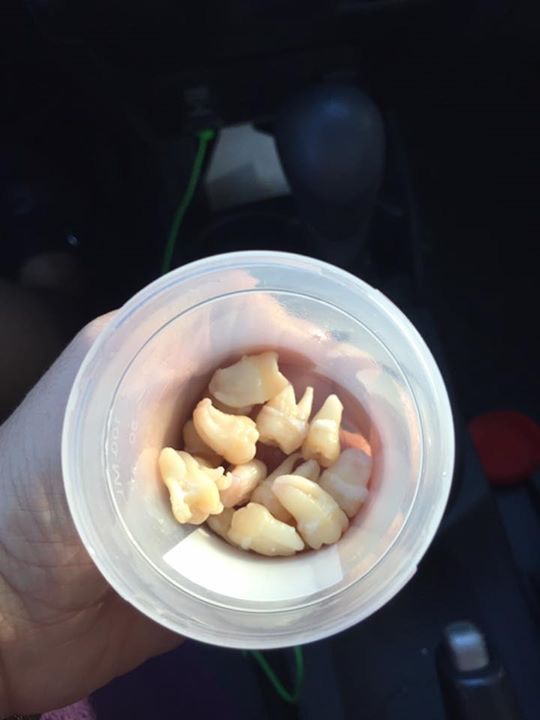
Here are the teeth before the experiment begun:
Here we are preparing for and commencing the experiment:


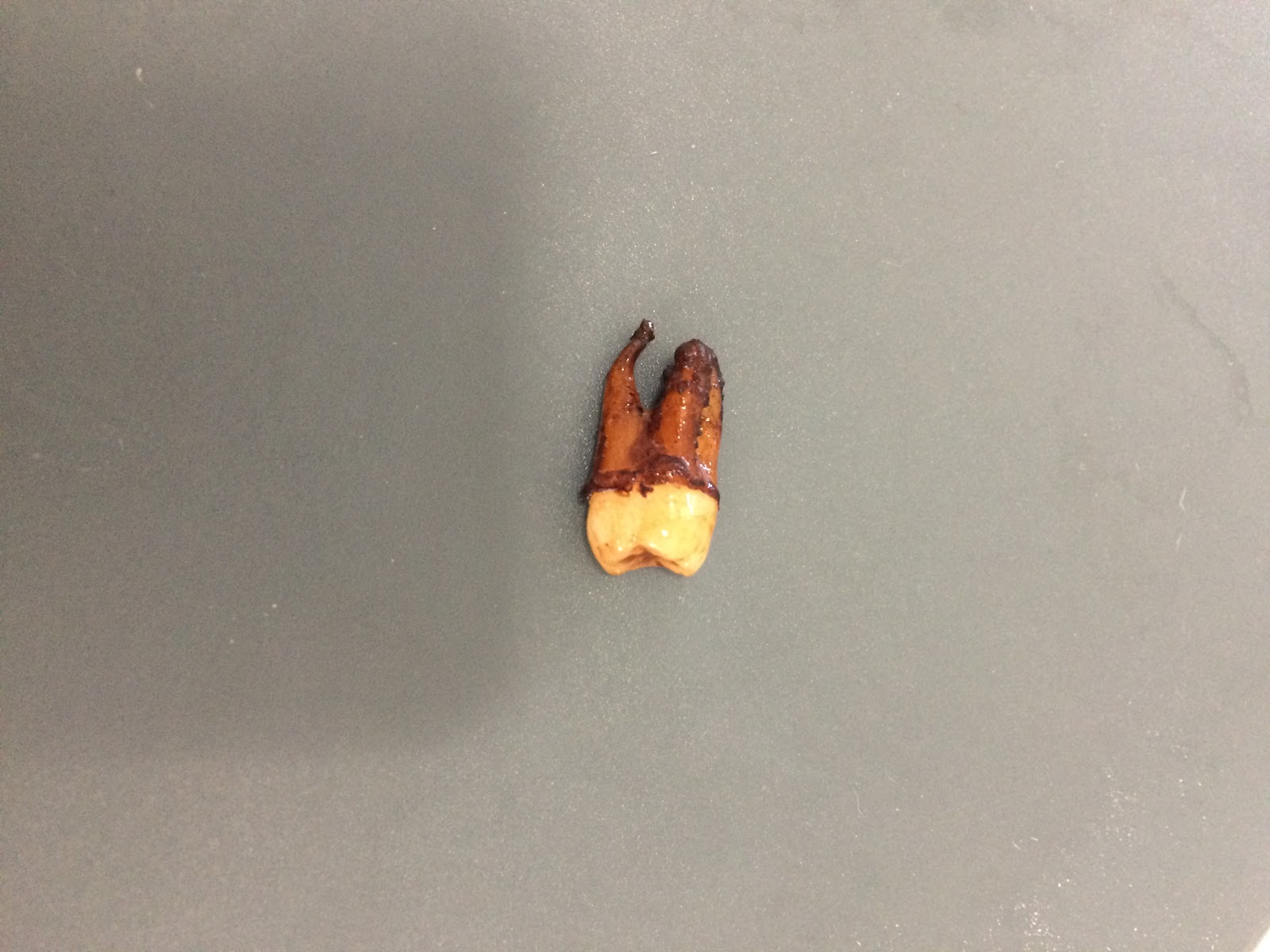
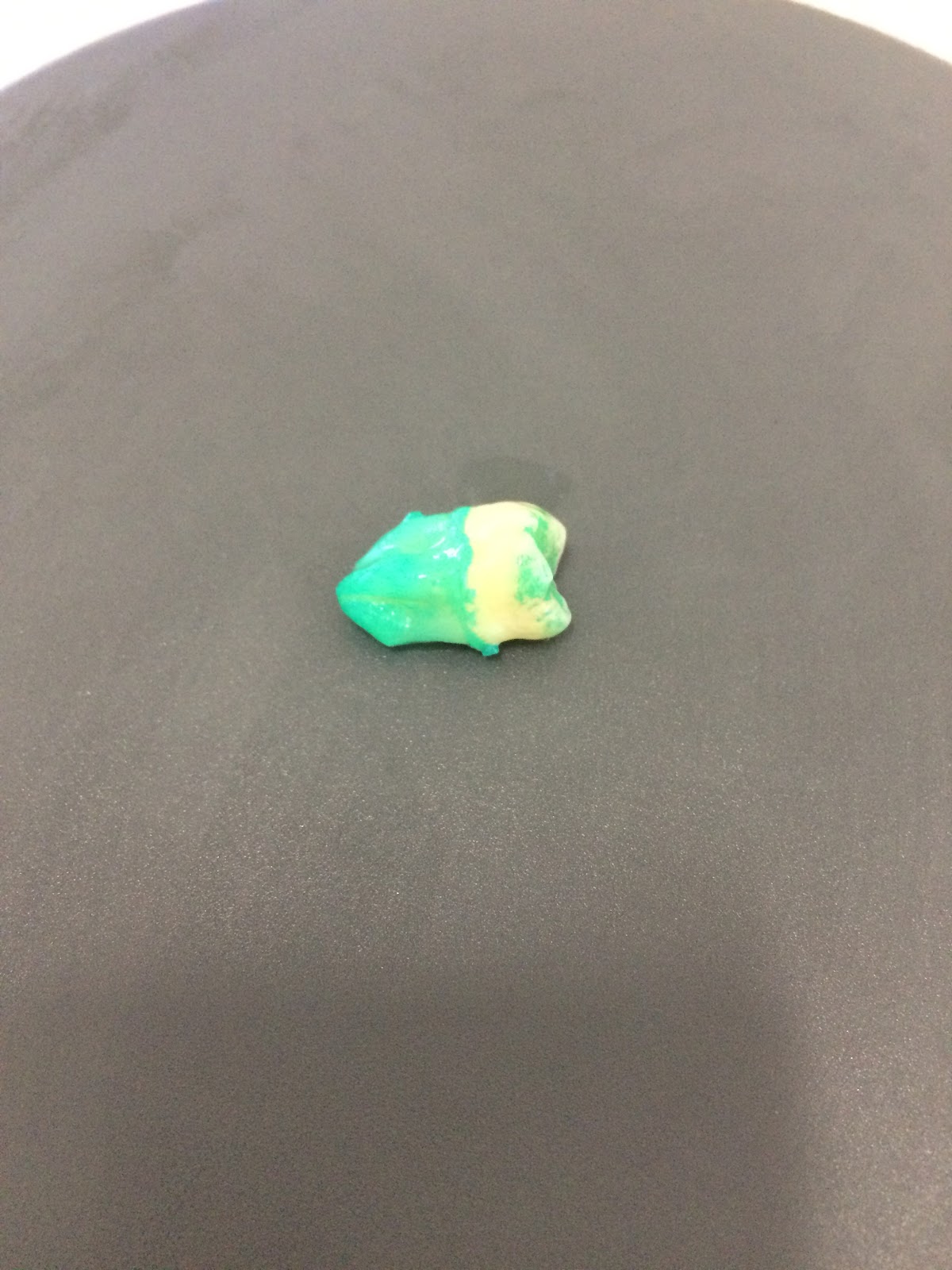
Here are the teeth after 24 hours of being in each drink (from left to right) Coca Cola, Coffee, Green Smoothie, Water, and Listerene


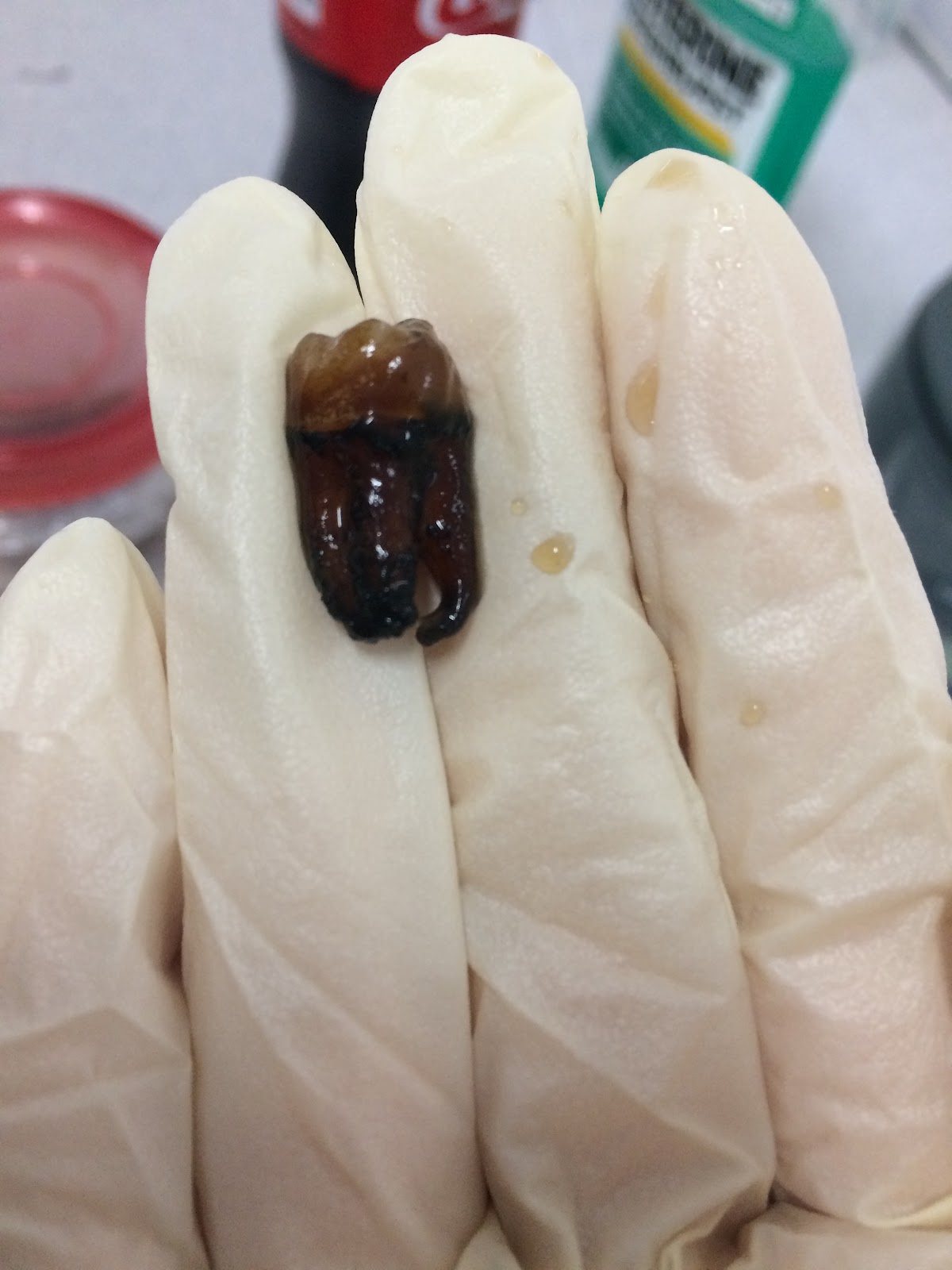
Here are the teeth in the middle of the 2 weeks (Day 8)


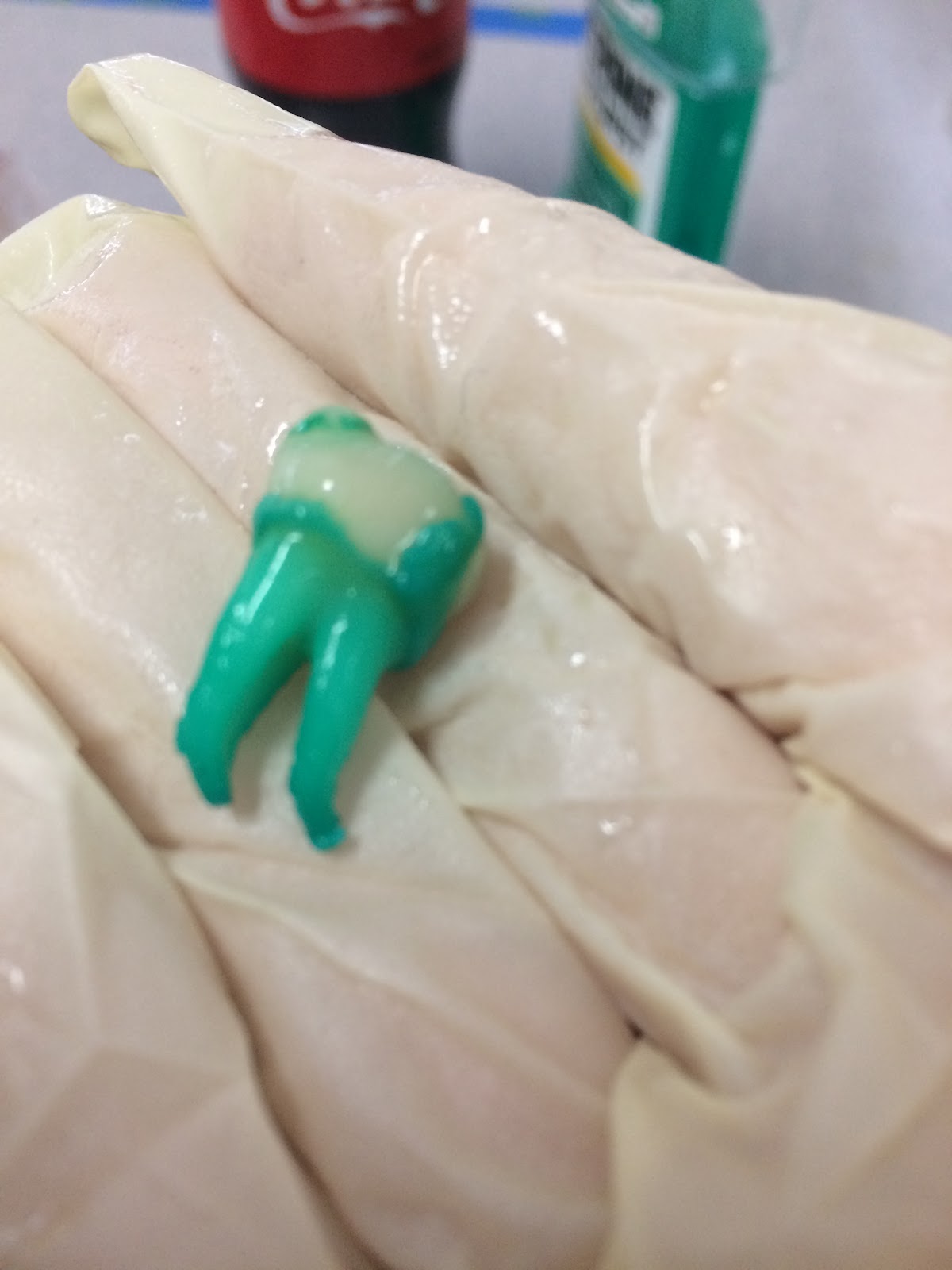
Here are the teeth on the last day of the experiment (Day 12)

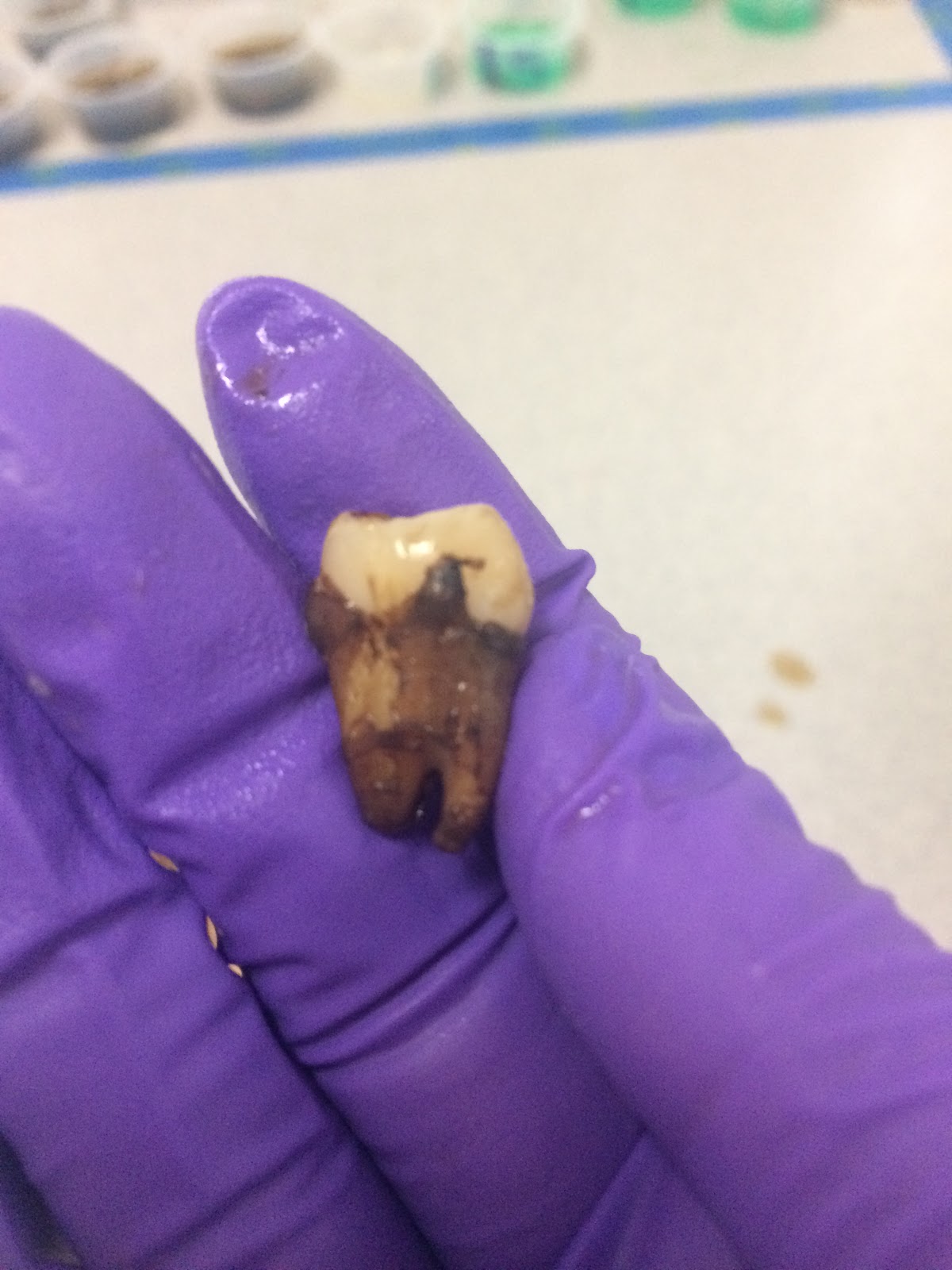
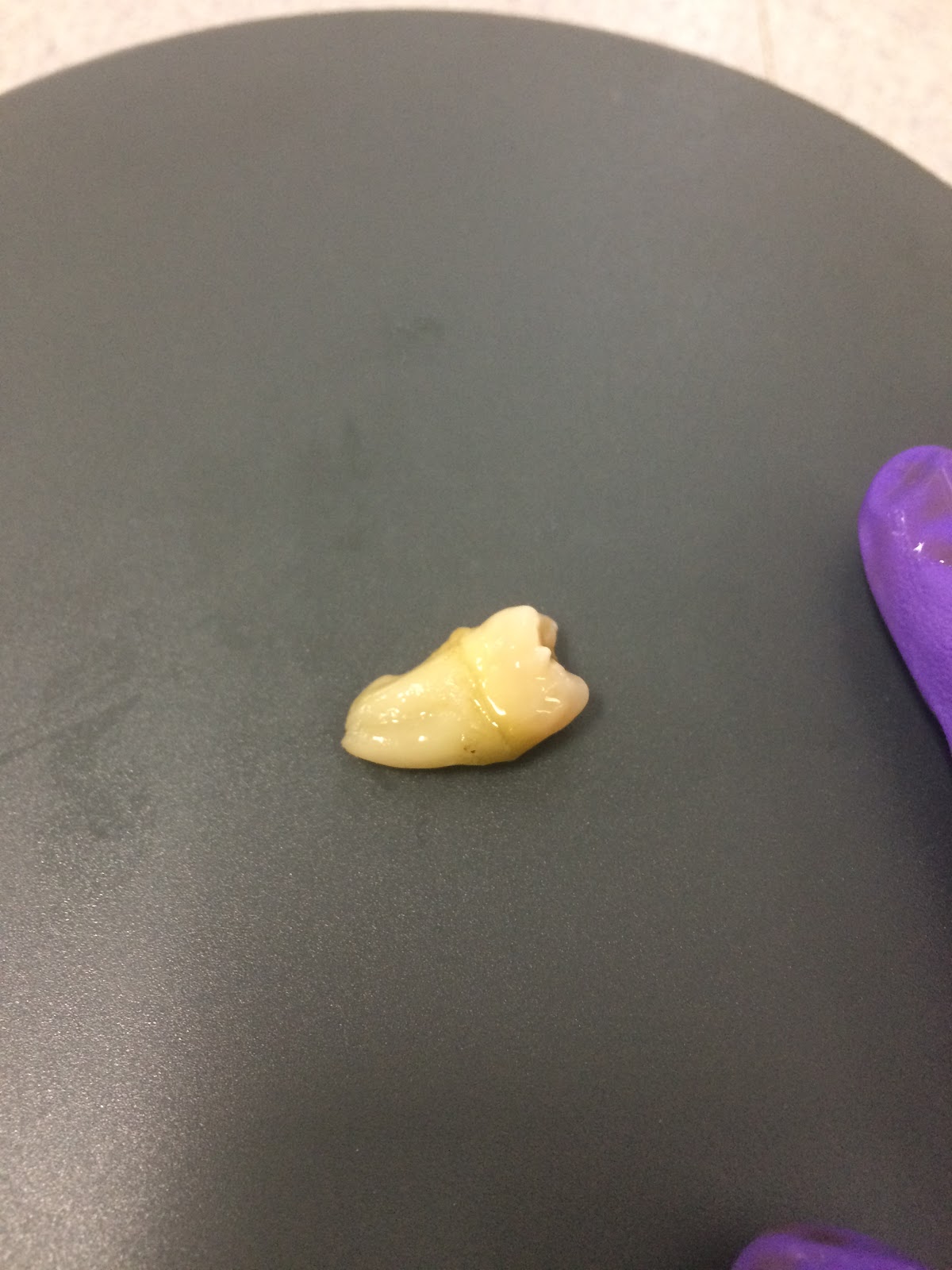


To wrap up the experiment,
Our claim was that the teeth in a drink with natural sugar wouldn't be as damaged as the ones in artificial sugar. Based on the pictures it is obvious that the ones in the smoothie and water have stayed in the same condition throughout the entire experiment and the ones in coca cola have a lot of damage. Based on the pictures, the teeth in coca cola have a lot more build up and plaque along with staining. The teeth in coffee didn't have a lot of plaque, just some staining. The teeth in the smoothie had almost no change because the smoothie has all natural sugars. The teeth in water had almost no change as well because the only thing in water is hydrogen and oxygen, there is no sugars. The Listerine stained the teeth a neon blue because there is a lot of food coloring in it and in the end there was a little but of plaque but not a horrible amount.
Our original hypothesis was, If human teeth are placed in a cup of coca cola, green juice, water, coffee and Listerine, then the tooth that was in the cup of coca cola will have the largest increase in weight because the coca cola contains the most corn syrup. Our data does support this based on the pictures. There were definitely some errors in our experiment, the beaker was turned off in the middle of our experiment. The weight was interestingly inconsistent with our other data so my group thinks that maybe some of them weren't fully dried before weighing or maybe there was something wrong with the scale. In conclusion, the drinks with artificial sugars or sweeteners caused the most damage to the teeth than the ones with natural sugar.
Subscribe to:
Posts (Atom)